
Why Your « Personalized » Cold Emails Still Sound Like Spam (And How to Fix It)
You’ve sent 500 emails this week. You’ve used merge tags -{first_name}, {company_name}, maybe even {recent_news}. Your reply rate? Still hovering around 1-2%. Here’s the uncomfortable truth: your prospects can smell templated outreach from a mile away, even when you think it’s personalized. The real question isn’t whether to automate your B2B outreach -it’s how to automate it without sounding like a robot pretending to be human.
This article breaks down exactly how AI-powered personalization works in 2025, what separates tools that actually boost reply rates from glorified mail merge, and the specific workflow that gets SDRs from 2% to 15%+ response rates.
What « AI Personalization » Actually Means (Beyond First Name Merge Tags)
Let’s kill a myth: adding someone’s name and company to a template isn’t personalization. It’s 2015 tactics with a 2025 price tag.
Real AI personalization analyzes multiple data layers simultaneously. We’re talking LinkedIn activity, recent company news, job changes, published content, podcast appearances, funding rounds, tech stack changes -then synthesizes this into messaging that reflects the prospect’s actual situation.
The difference in output is stark. A merge-tag email says: « Hi Sarah, I noticed Acme Corp is growing fast. » An AI-personalized email says: « Hi Sarah, saw your comment on Mark’s post about PLG fatigue -your point about enterprise buyers needing more hand-holding resonated. Curious if that’s driving the new AE hires I spotted. »
The first gets deleted. The second gets replies. Gong’s 2024 analysis of 300,000+ cold emails found that messages referencing specific prospect activity (not just company news) saw 3.2x higher reply rates than those using only firmographic personalization.
The catch? Doing this manually takes 15-20 minutes per prospect. At scale, it’s impossible. That’s where AI comes in -not to replace the thinking, but to do the research legwork in seconds.

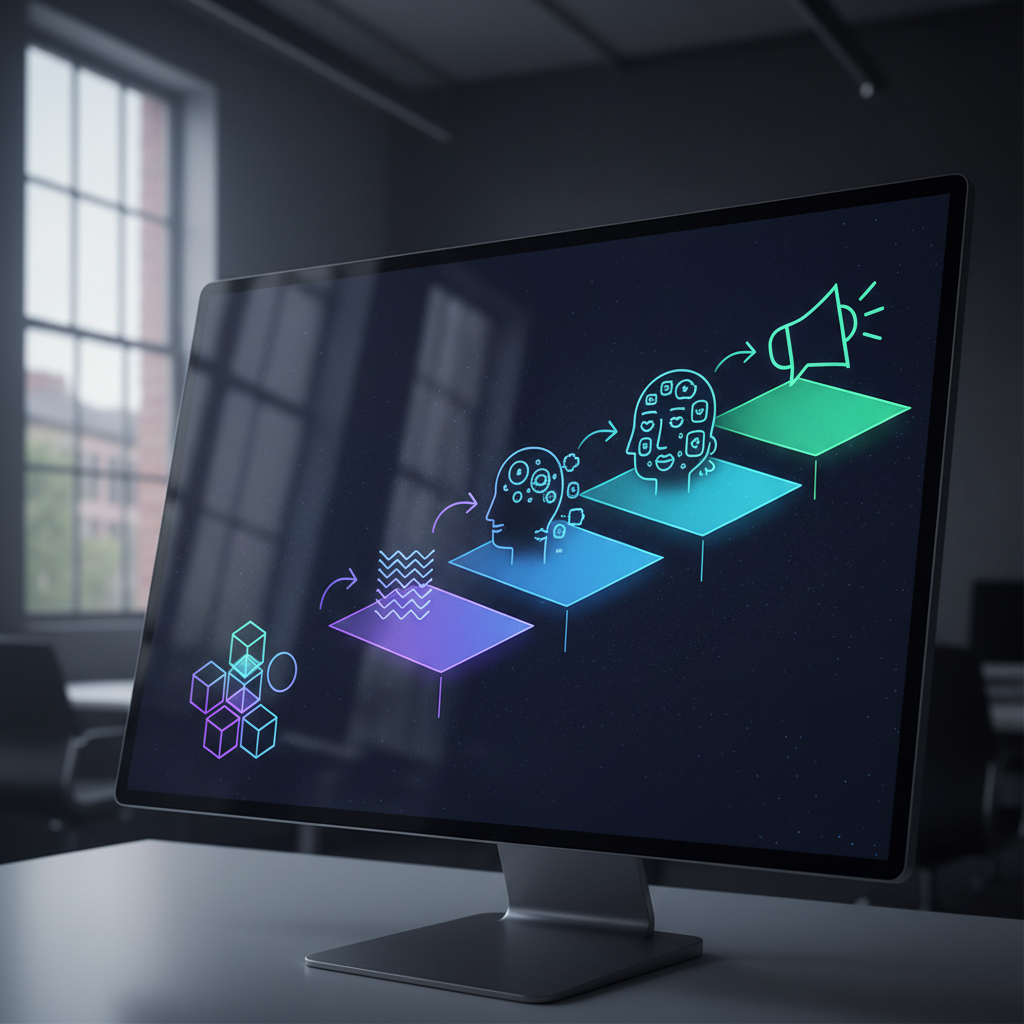
The 4-Layer Stack That Actually Works for Automated Outreach
Most teams bolt together 5+ tools and wonder why their sequences feel disjointed. Here’s the architecture that actually performs:
Layer 1: Data enrichment
Tools like Apollo, ZoomInfo, or Clearbit pull firmographic basics -company size, industry, funding, tech stack. This is table stakes, not differentiation.
Layer 2: Signal detection
This is where most stacks fall short. You need real-time triggers: job changes (LinkedIn Sales Navigator), funding announcements (Crunchbase), hiring patterns (job board scrapers), content engagement (Bombora intent data). Without signals, you’re just interrupting. With signals, you’re arriving at the right moment.
Layer 3: Personality and communication style analysis
Here’s the underrated layer. Platforms like Humanlinker analyze prospects’ communication patterns using frameworks like DISC to predict how they prefer to receive information. A D-type executive wants bullet points and bottom-line impact in 3 sentences. An S-type manager wants relationship-building and social proof. Same product, radically different email structure.
Layer 4: AI message generation
Only after layers 1-3 does message generation make sense. The AI should pull from enriched data, detected signals, and personality insights to craft messages that feel researched -because they actually are.
The mistake? Starting at layer 4. If your AI is generating messages without rich inputs, you’re just automating mediocrity faster.
The Exact Workflow: From Lead List to Sent Sequence in Under 10 Minutes
Let’s get tactical. Here’s how a high-performing SDR actually uses this stack:
Step 1: Build your list with intent signals (2 minutes)
Start with your ICP filters -industry, company size, role. But add a signal layer: « Companies that raised Series B in last 90 days » or « Prospects who changed jobs in last 30 days » or « Accounts showing buying intent for your category. » This alone 3x your relevance.
Step 2: Run bulk enrichment + personality analysis (1 minute)
Upload your list. Let the platform pull LinkedIn data, recent posts, news mentions, and generate personality profiles. Tools like Humanlinker do this automatically, outputting not just data but communication recommendations per prospect.
Step 3: Review AI-generated messages (5 minutes)
This is where you add human judgment. The AI drafts personalized openers and full sequences. Your job: scan for accuracy, tone-match to your voice, and catch any hallucinated details. Pro tip: reject any message that could apply to more than one person on your list. If it’s not specific, it’s not ready.
Step 4: Load into your sequence tool and schedule (2 minutes)
Push to Outreach, Salesloft, Apollo sequences, or whatever you run. Set your sending windows -Tuesday-Thursday, 8-10am local time still wins for B2B.
Total active time: under 10 minutes for 50+ genuinely personalized touches. Compare that to 15+ hours doing this manually.

Why Most AI Outreach Tools Still Fail (And What to Look For Instead)
Here’s what vendors won’t tell you: most « AI personalization » tools are just GPT wrappers with basic prompts. They pull a company description, jam it into a template, and call it personalized.
Red flags to watch for:
What actually matters in a tool:
The best indicator? Ask for sample outputs using your actual prospects. If they sound like they could apply to anyone, walk away.

The Numbers: What « Good » Actually Looks Like in 2025
Let’s anchor expectations with real benchmarks from teams using AI-personalized outreach:
Cold email reply rates:
Time investment per 100 prospects:
Cost per meeting booked:
These aren’t theoretical. Humanlinker publishes case studies showing clients moving from 2% to 18% reply rates after implementing their personality-based personalization layer. The math is simple: same effort, 5-9x more conversations.
One caveat: AI personalization amplifies your targeting quality. If your ICP is wrong, you’ll just get ignored faster. Fix your list before you fix your messaging.

The Line Between Automation and Authenticity (And How Not to Cross It)
Here’s the uncomfortable question: if AI writes the email, is it still « authentic »?
The honest answer: it depends on your involvement.
Automation crosses into inauthenticity when:
Automation stays authentic when:
The winning mindset: AI is your research assistant, not your ghostwriter. It finds the hooks, drafts the structure, suggests the angles. You decide what’s true to your voice and genuinely relevant to the prospect.
Some teams add a rule: if you wouldn’t feel comfortable if the prospect knew AI helped write this, don’t send it. That filter catches most authenticity issues.

—
Your next step: Pick 20 prospects you’ve been meaning to reach out to. Run them through an AI personalization tool -Humanlinker offers a free tier -and compare the output to what you would have written manually. If the AI version is more researched and specific than yours, you’ve found your leverage point. If it’s not, you’ve found a tool to avoid.