
How to Actually Pick Supplements for Your Goals When Everyone’s Selling Something
You’ve got a goal -better sleep, more muscle, clearer skin, whatever -and you know supplements might help. So you search. And within five minutes, you’re drowning in affiliate links, sponsored « reviews, » and influencers pushing whatever brand paid them this month.
Here’s the problem nobody talks about: the supplement industry spends $900+ million yearly on influencer marketing alone. That « honest review » you’re watching? Statistically, it’s a paid placement. This guide breaks down how to cut through the noise and actually match supplements to your specific goals using data, not someone’s commission structure.
Why Your Current Research Method Is Probably Failing You
The typical supplement research journey looks like this: Google your goal, find a listicle, click through to Amazon, pick the one with the most reviews. Sounds logical. It’s also deeply flawed.
Amazon’s « bestseller » status often reflects marketing spend, not product quality. A 2022 ConsumerLab analysis found that 23% of supplements tested didn’t contain what their labels claimed. The products with the flashiest packaging and biggest ad budgets frequently underperform products you’ve never heard of.
Influencer recommendations compound this problem. A study in the Journal of the Academy of Nutrition and Dietetics found that 90% of fitness influencers have no formal nutrition credentials, yet their supplement recommendations reach millions. They’re not lying to you necessarily -they often genuinely believe in what they’re selling. But belief doesn’t equal efficacy, and their income depends on you clicking that link.
The real question isn’t « what’s popular? » It’s « what does the actual research say works for my specific situation? »
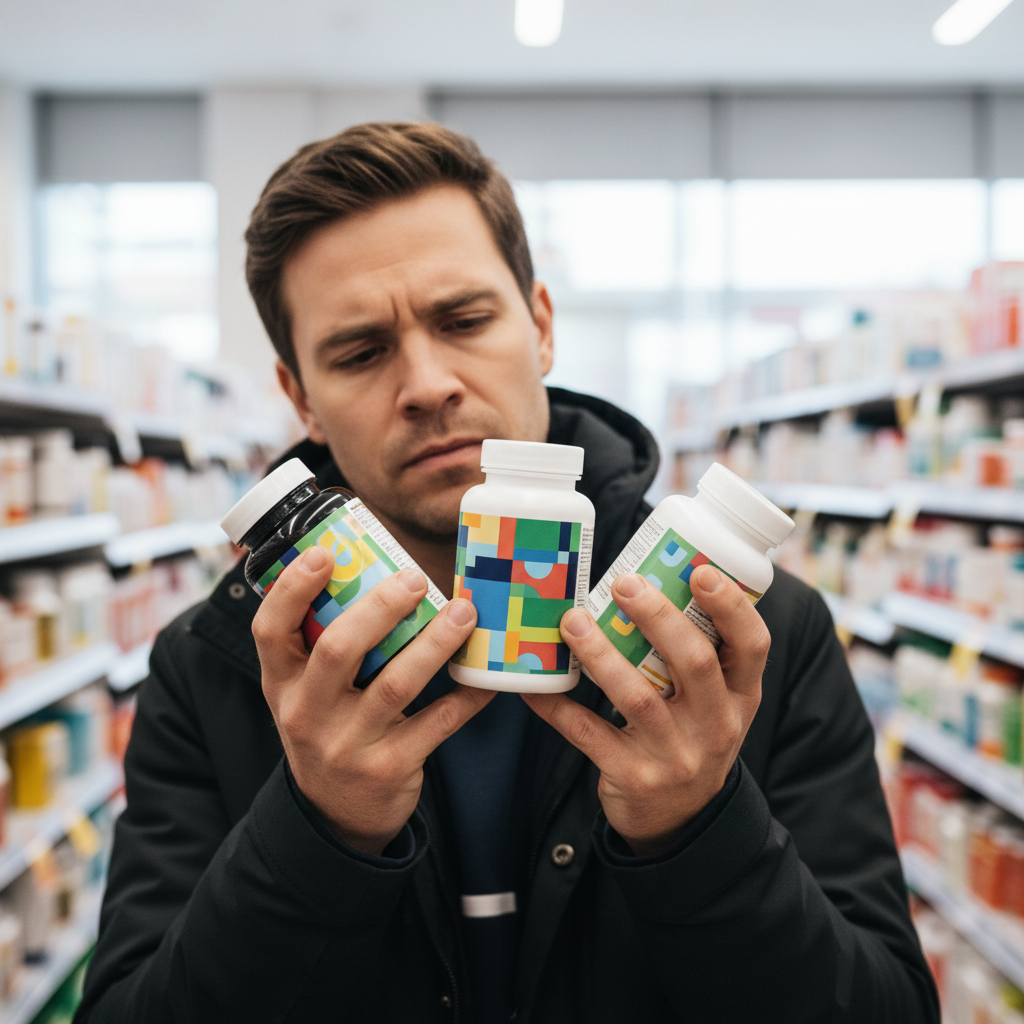
What « Evidence-Based » Actually Means (And Why Most Claims Aren’t)
You’ll see « clinically proven » or « backed by science » on almost every supplement bottle. These phrases mean almost nothing legally.
Real evidence follows a hierarchy. At the bottom: in vitro studies (test tubes) and animal research. These suggest possibilities but don’t prove human benefits. In the middle: small human trials, often funded by the company selling the product. At the top: randomized controlled trials (RCTs), systematic reviews, and meta-analyses published in peer-reviewed journals indexed on databases like PubMed.
Here’s a concrete example. Ashwagandha gets hyped for stress and testosterone. The actual evidence? Decent for cortisol reduction (multiple RCTs showing ~15-25% decreases), weaker for testosterone (studies exist but with small sample sizes and inconsistent dosing). Meanwhile, many ashwagandha products use root powder instead of the standardized KSM-66 or Sensoril extracts that were actually studied.
Practical rule: if a benefit was demonstrated using a specific extract at a specific dose, and the product you’re considering uses a different form or dose, the research doesn’t transfer. A 300mg serving of generic ashwagandha isn’t the same as 300mg of KSM-66.

Matching Supplements to Goals: What Actually Works for What
Let’s get specific. Here’s what the research actually supports for common goals:
Muscle building/strength: Creatine monohydrate remains the most studied and consistently effective supplement (3-5g daily, no loading phase necessary). Protein powder works if you’re not hitting 1.6-2.2g protein per kg bodyweight through food. Beyond that? Most « muscle builders » have weak or zero evidence.
Sleep quality: Magnesium (particularly glycinate or threonate forms, 200-400mg before bed) has solid evidence. Melatonin works for jet lag and shift work, less clearly for general insomnia -and most products overdose it (0.5-1mg is usually sufficient, yet most sell 5-10mg). L-theanine at 200mg shows moderate evidence.
Energy/focus: Caffeine works (obviously), but tolerance builds fast. L-theanine paired with caffeine smooths the curve. Most « nootropic stacks » rely on proprietary blends hiding inadequate doses.
Joint health: Collagen peptides (10-15g daily) have decent evidence for cartilage support over 3-6 months. Glucosamine/chondroitin? Mixed results -some people respond, many don’t.
General health: Vitamin D if you’re deficient (get tested -2000-4000 IU daily for most deficient adults). Omega-3s if you don’t eat fatty fish twice weekly (EPA+DHA combined at 1-2g daily).
Notice what’s missing from this list? Most of what fills supplement store shelves.

The Bioavailability Trap: Why Form Matters More Than Dose
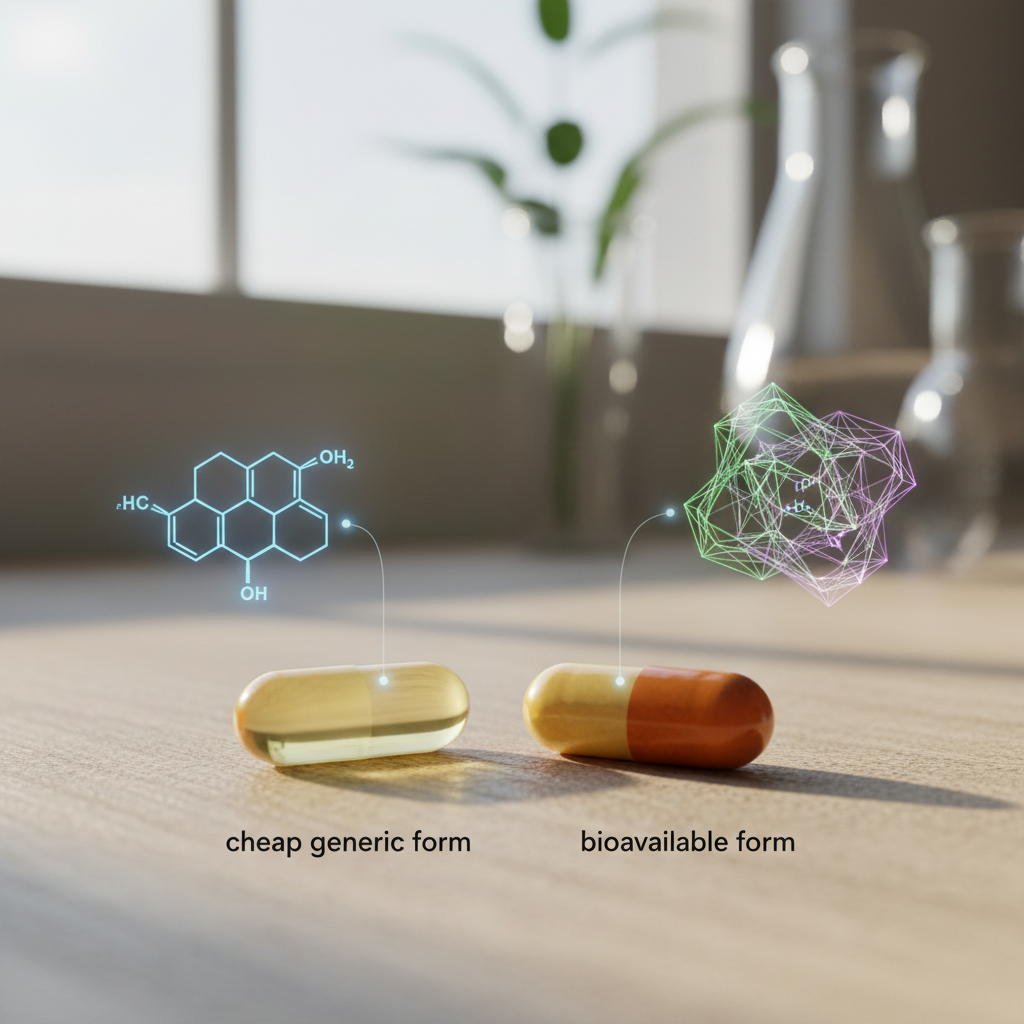
Here’s something supplement marketing exploits constantly: they list impressive doses of cheap, poorly absorbed forms.
Magnesium oxide (the most common form) has roughly 4% bioavailability. Magnesium glycinate or citrate? 25-30%. That « 500mg magnesium » supplement might deliver 20mg to your cells if it’s oxide, or 125mg if it’s glycinate. Price per pill means nothing without this context.
Same issue with zinc. Zinc oxide (cheap, poorly absorbed) versus zinc picolinate or citrate. Curcumin without piperine or lipid formulation has roughly 1% bioavailability -you’re essentially paying for expensive urine.
Vitamin forms matter too. Vitamin K2 as MK-7 stays active in your body far longer than MK-4. Folate as methylfolate works for everyone; folic acid doesn’t convert efficiently in roughly 40% of the population due to MTHFR gene variants.
Before buying anything, search « [ingredient name] bioavailability » and check what form was used in successful clinical trials.
Red Flags That Signal a Product (or Recommendation) Is Garbage
Train yourself to spot these immediately:
Proprietary blends: If the label says « proprietary blend 500mg » followed by a list of eight ingredients, you have no idea how much of each you’re getting. Usually it’s mostly the cheapest ingredient with trace amounts of the expensive ones.
« Clinically studied » without specifics: Which study? What dose? What population? If they can’t tell you, they’re banking on you not asking.
Celebrity or influencer-founded brands: The markup on these typically runs 200-400% above comparable products. You’re paying for the face, not the formula.
Amazon-only brands with perfect ratings: Review manipulation is rampant. Look for products also sold through other channels with third-party testing.
Too many ingredients: A 30-ingredient « everything formula » almost certainly underdoses most of them. Effective supplements tend to be targeted.
Claims that sound too good: « Burn fat while you sleep! » « Gain 10 pounds of muscle in 30 days! » If it contradicts basic physiology, skip it.
The best products tend to be boring. Simple formulas, transparent labels, third-party testing (look for NSF Certified for Sport, Informed Sport, or USP verification), and realistic claims.

Building Your Stack Without Getting Played
Here’s a practical framework for assembling supplements that actually match your goals:
Step 1: Identify your actual gaps. Not what you think sounds cool -what you’re genuinely deficient in or what your lifestyle creates genuine need for. If you eat plenty of protein, you don’t need protein powder. If you get 20 minutes of sun daily, you probably don’t need vitamin D.
Step 2: Research the specific ingredient, not the product. What does the evidence say? What form works? What dose? Examine.com is a free, ad-free database that summarizes research without selling anything.
Step 3: Find products matching those specs. This is where it gets tedious -comparing labels, checking for third-party testing, calculating actual price per effective dose.
Step 4: Start one thing at a time. If you add five supplements simultaneously and feel better (or worse), you won’t know which one did it.
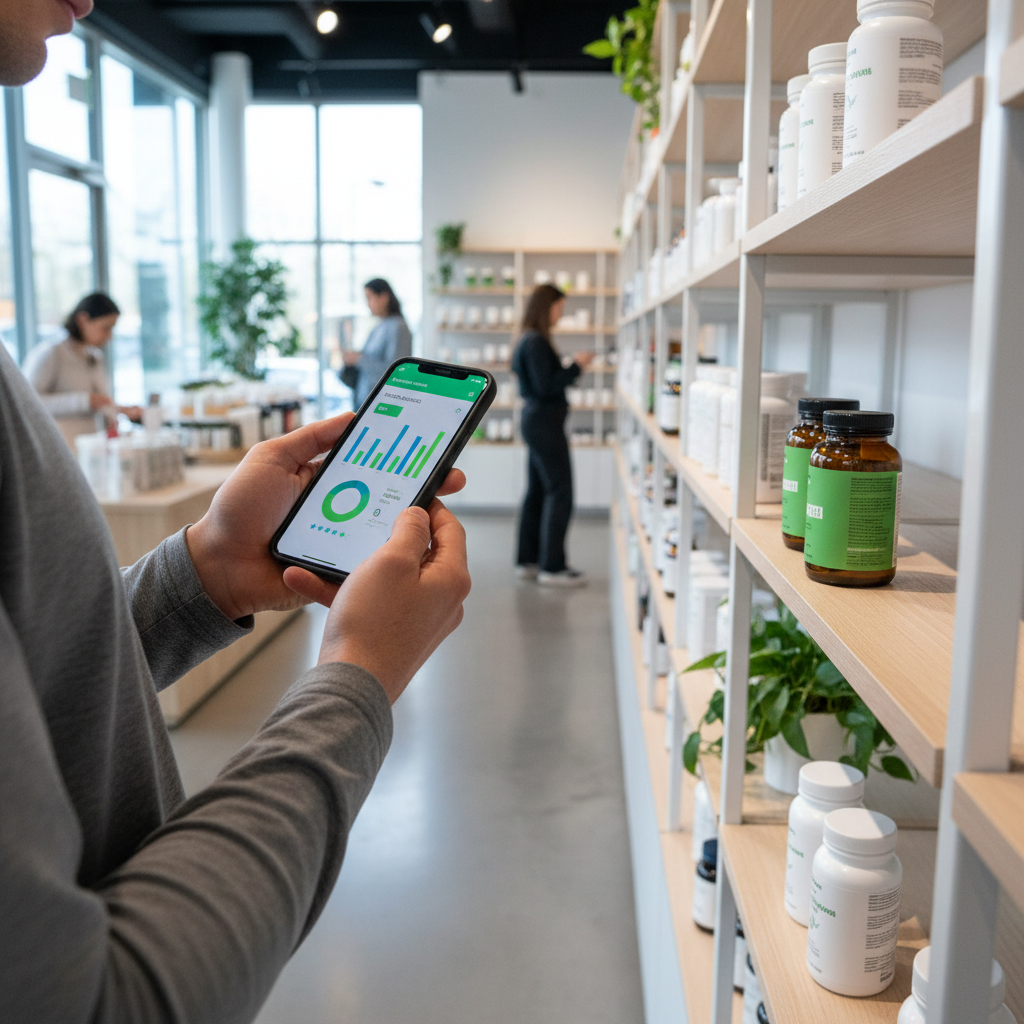
Tools like Mimir exist specifically to shortcut steps 3-4 -algorithmically comparing products across efficacy, safety, lab testing, and price without brand sponsorships influencing the recommendations. The app scores products on transparent criteria and builds stacks optimized for your specific goals and budget, which solves the « how do I actually compare 47 magnesium products? » problem most people face.
Your Next Move
Stop researching supplements through the lens of « what’s popular » and start with « what does my body actually need, and what does unbiased evidence support? »
Audit your current stack. For each product, ask: What’s the evidence for this specific form and dose? Is this third-party tested? Am I paying a premium for marketing? Could I get the same active ingredient for less from a less-hyped brand?
If that process sounds exhausting -it is. That’s exactly why the influencer-industrial complex thrives. Most people don’t have time to read PubMed abstracts and compare bioavailability studies.
Your two options: invest the hours yourself using databases like Examine.com and ConsumerLab, or use tools specifically designed to do this analysis without brand conflicts. Either way, the goal is the same -supplements chosen for your goals, not someone else’s revenue goals.